


Johns Hopkins All Children’s Helps Find Solutions for Kids With Migraine Disorder
Kids who get severe migraine headaches miss out on so much of life.
Up to 10% of school-age kids and 28% of adolescents, both boys and girls, are impacted by migraine.
Migraine is a neurological disorder with a profound genetic basis that can impact almost all of the brain’s functions.
It’s often characterized by a severe headache, nausea and sensitivity to light, sound and smell. There may be difficulty focusing, sleep difficulties, moodiness or irritability. A migraine can last hours or even days.
Matthew, 13, first began experiencing debilitating headaches at 8 years old.
“I would get this intense pain, mostly behind my eyes,” Matthew says. “I would have to finish the day in bed. I really couldn’t do anything else.”
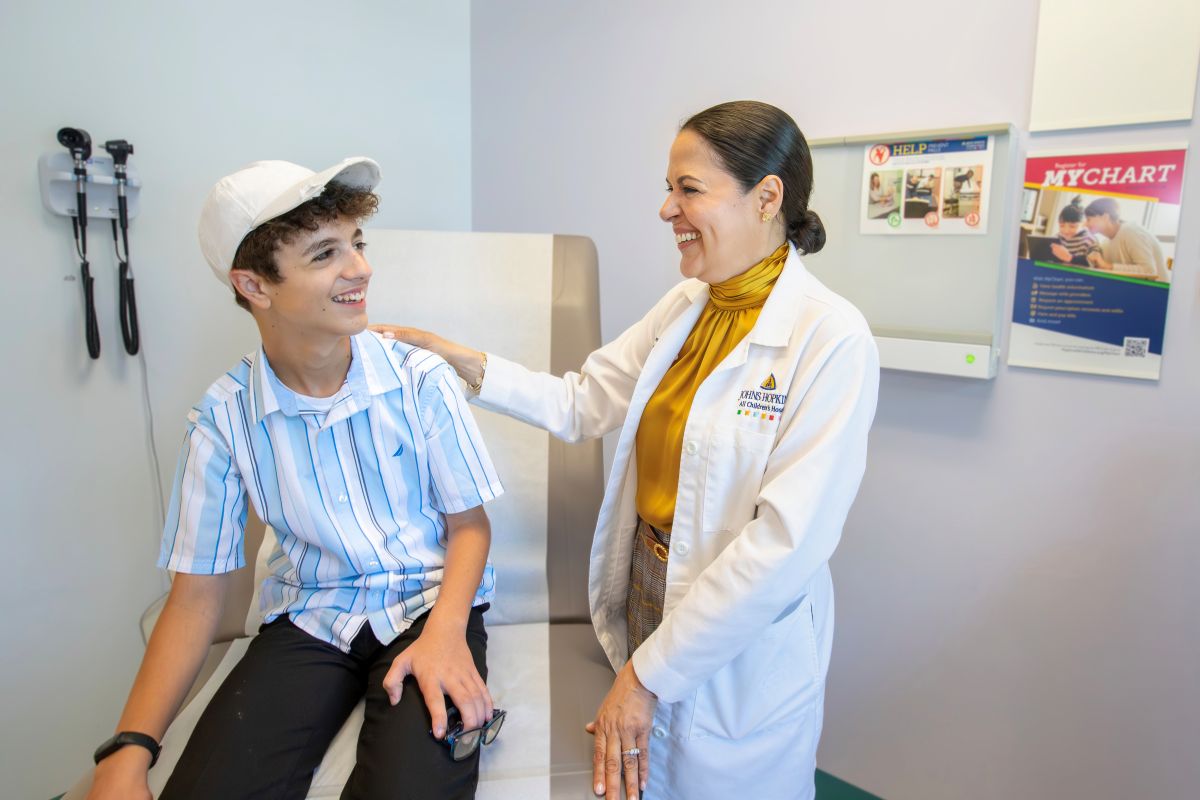
Clarimar Borrero-Meijas, M.D., is a pediatric neurologist who specializes in migraine and headache disorders at Johns Hopkins All Children’s Hospital in St. Petersburg, Florida.
“Over the past decade, we’ve gained a good understanding of the complex cascade of electrical and chemical reactions that go awry, or that are not working as they should in people with these disorders,” Borrero-Mejias says.
Matthew was able to meet with Borrero-Mejias at the hospital’s Outpatient Care Center in Brandon.
“Dr. Borrero was very sympathetic, not only to Matthew’s migraines, but to his entire well-being as a person,” says Matthew’s mom, Diana. “She really took the time to understand Matthew’s day-to-day activities and functions.”
Lifestyle and behavioral management play a role in preventing or stopping migraine attacks.
Borrero-Mejias says eight hours of sleep, regular meals, good hydration and at least 30 minutes of daily exercise are key.
Another key to managing a migraine disorder lies in understanding what elements in a child’s environment may trigger the attacks — and then learning how to shape daily living to help avoid or mitigate those triggers.
Over time, Matthew and his family began to understand what would bring on a migraine, how his sensitivity to light kept him from playing outside with his friends, and how his sound sensitivity was triggered by situations like the unusually large classroom size in the school he was attending.
There are also medications that can be effective in either stopping migraines or preventing an attack from happening.
Episodic migraine attacks can often be aborted with NSAIDS (non-steroidal anti-inflammatory medications) or triptans.
Chronic migraine may respond better to a daily medication that can work as a preventative.
Clinical trials in children are ongoing for newer medications that may present more options in the near future.
Armed with appropriate medications and a new routine, Matthew began to notice some welcome changes. His headaches were fewer and shorter in duration.
Eventually, he was able to taper off most of his medications. He’s shown improvements in school, and his social life has changed for the better. He can now enjoy time with his friends and just being a kid.
“I can do so much more now,” Matthew says.
READ MORE:
- From Patient to Parent: A Sickle Cell Survivor Shares His Greatest Joy
- Johns Hopkins All Children’s Hospital Celebrates 100 Years of Healing
- From Tiny to Thriving: Baby Cash’s Story
Presented By: John Hopkins All Children's Hospital | Originally published in the October 2026 issue of Tampa Bay Parenting Magazine