


Coming Soon: Required Electrocardiograms During Sports Physicals
There’s a big change coming for parents of high school athletes. Starting this fall, a new law called the Second Chance Act will require all high school athletes who want to play sports during the 2026-2027 school year to pass an electrocardiogram (EKG/ECG) screening. The bill allows a student who has received an EKG/ECG in the two years prior to the 2026-2027 school year to use that EKG/ECG scan to meet the requirement. If a student has an EKG/ECG that detects a problem, they must get written medical clearance from a doctor to play sports.
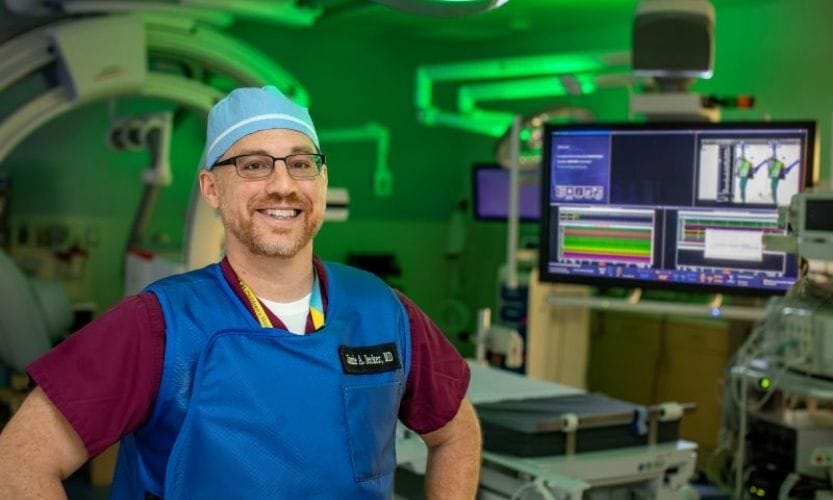
Jamie Decker, M.D., a pediatric cardiologist in the Heart Institute at Johns Hopkins All Children’s Hospital, shares more information about this change.
What led to this new requirement?
Decker: The hope is to avoid sudden cardiac arrest in student athletes and to detect heart problems before they have any symptoms. We're currently doing a lot of screenings for eighth graders, who will soon be ninth graders and are going to be participating in sports, to try and get ahead of the rush before next school year.
How was the screening before this change?
Decker: The screening process that occurred up until this coming year consisted of a questionnaire that the American Heart Association published 20 years ago asking specific questions about family history, personal history, medications, etc., alongside a physical exam. Now the student athletes will be required to get an electrocardiogram or an ECG/EKG.
What is an EKG/ECG?
Decker: It’s a quick and simple process. We attach stickers with electrodes to the chest, and sometimes arms and legs. The test can help diagnose irregular heartbeats and other problems that could lead to a heart attack. It takes less than five minutes and is painless.
Aside from EKG/ECG, what else can parents keep an eye on regarding their son or daughter’s heart health?
Decker: Symptoms are important to pay attention to, particularly during activity. If a child complains of palpations, which are fast or irregular heartbeats, or if they have chest pain or pass out while they're playing sports, that's a red flag that would require us to evaluate them.
Do you believe this will be lifesaving?
Decker: I believe that this will save lives. Data shows that adding an ECG/EKG to the physical exam and questionnaire has a higher positive predictive value, meaning it's more likely to pick up a heart problem from an athlete who has no symptoms. Florida is the first state to mandate this requirement, and we are honored to be on the cutting edge of this new detection.
How can I get an EKG/ECG for my child?
Decker: Johns Hopkins All Children’s Hospital is working on low-cost options for families. We are also working together with an organization called Who We Play For, and you can check out their website for upcoming screening dates: WhoWePlayFor.org. For more information about our sports cardiology program, visit t.jh.edu/ACHSportsCardiology.
Read more from Johns Hopkins All Children's Hospital:
- Tracii’s Miracle – Johns Hopkins All Children’s Hospital
- Snoh’s Story at Johns Hopkins All Children’s: From One Pound to a Thriving NICU Graduate
Presented by: Johns Hopkins All Children's Hospital
Originally published in the April 2026 issue of Tampa Bay Parenting Magazine.