


STEM is Important – So What Can Parents Do About It?
STEM used to be an easy-to-understand acronym. In the 1990s, STEM (Science, Technology, Engineering and Mathematics) was an education buzzword — a category for science fair volcanoes, “Hello, World” coding and bridges built from marshmallows and toothpicks.
Today, with ample access to AI, 3D printers, computer-aided design (CAD) software, digital simulators and more, STEM is broader and deeper than ever before.
Parents want their children to feel comfortable in this changing world, but it’s easy to feel overwhelmed by so much new technology. How do you know if your child’s school is keeping up, and can you help at home?
As a mom and STEM educator, I think it helps to think in terms of opportunities and connections.
STEM is valuable because of the wide-ranging skills it teaches. It goes beyond mastering specific programs. It’s about learning to think critically and creatively.
It provides students with the chance to take risks safely, work in teams or independently, make decisions with confidence and adjust their approaches to solve problems. These are lifelong skills that students can apply to any field.
Schools that get STEM right these days are implementing new standards specific to these topics. Teachers may have students create digital book reports using a coding program, outline an essay with AI prompts or 3D-print a replica of an ancient monument or historic site they created through CAD.
These skills may be taught in a special class or by core teachers, depending on how the school is structured. Good STEM schools have staff in place to support traditional classroom teachers who are content experts but want to incorporate STEM into their lessons.
I came to Corbett Prep five years ago to lead programs and curriculum in the school’s Tomlin Family Application Lab, a STEM center for all students in PreK3-8th grade. The App Lab gives us a dedicated time and place to expand upon classroom lessons and units and provide hands-on opportunities for students to make discoveries.
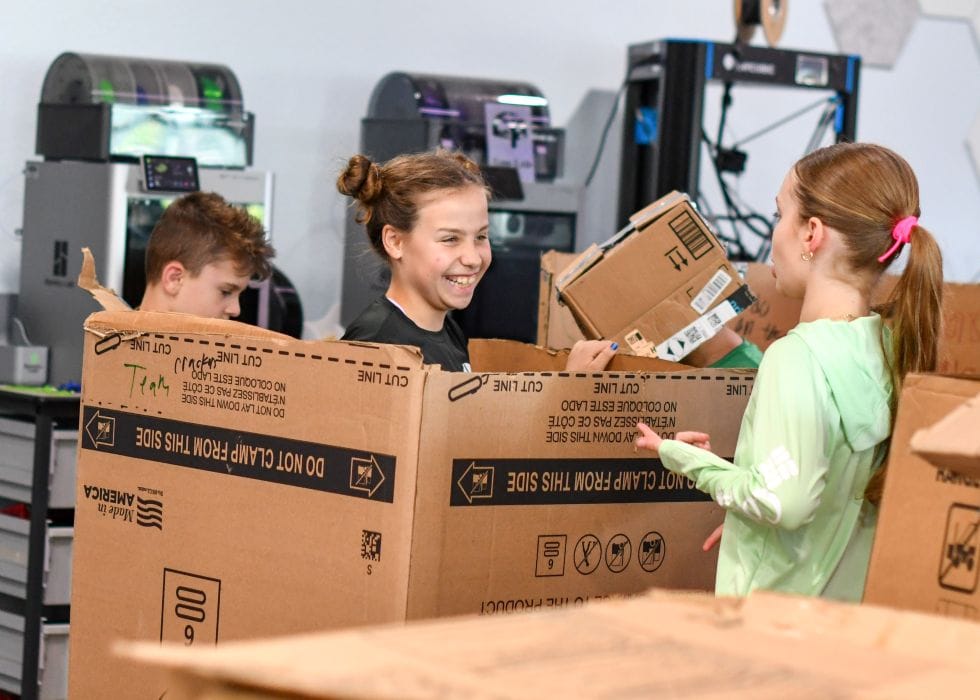
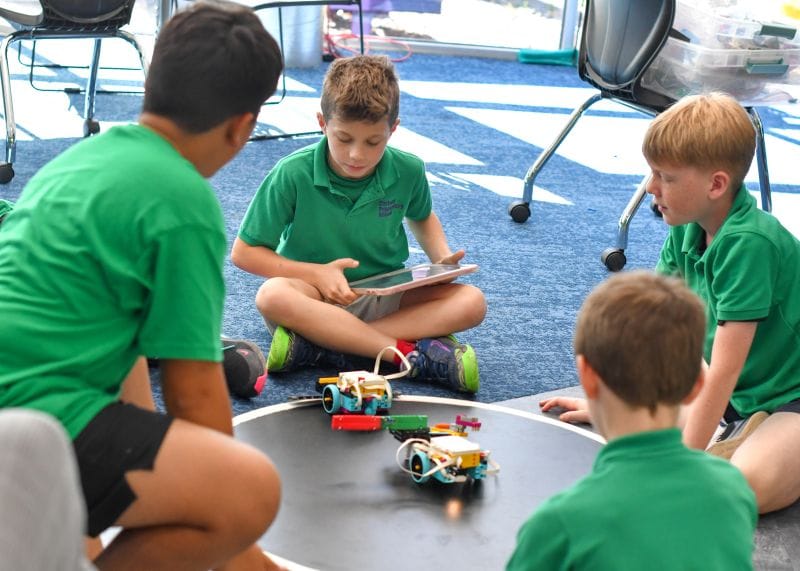
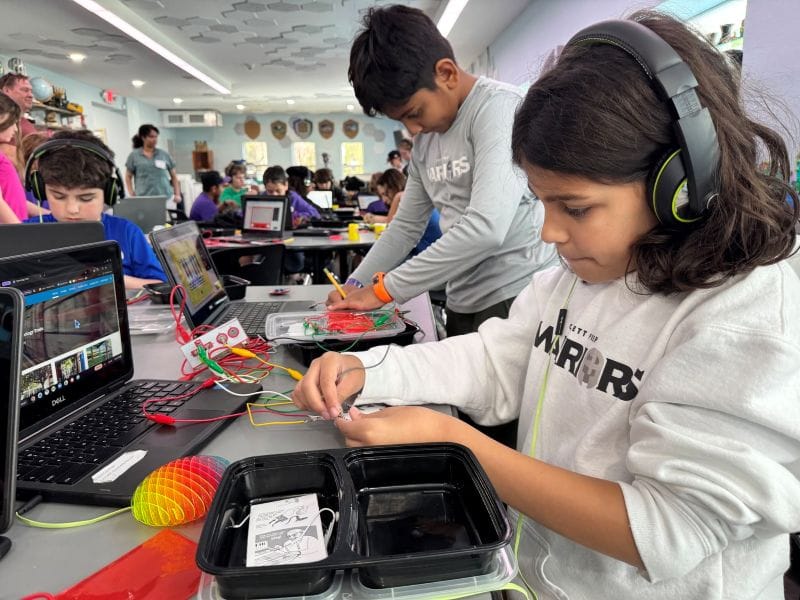
Visitors to the App Lab might find robotics teams testing sophisticated coding to prepare for competitions. Or they see a class of students spread out with duct tape and cardboard boxes to build the biggest, strongest forts for water wars.
At any given time, students could be filming and editing videos, wiring circuits or logging what they found on nature scavenger hunts.
We have high-tech and low-tech tools. I have recently gotten very excited about 3D printing. All the kids want to make dragons, and while they are cool, what I love is how technology challenges us to think.
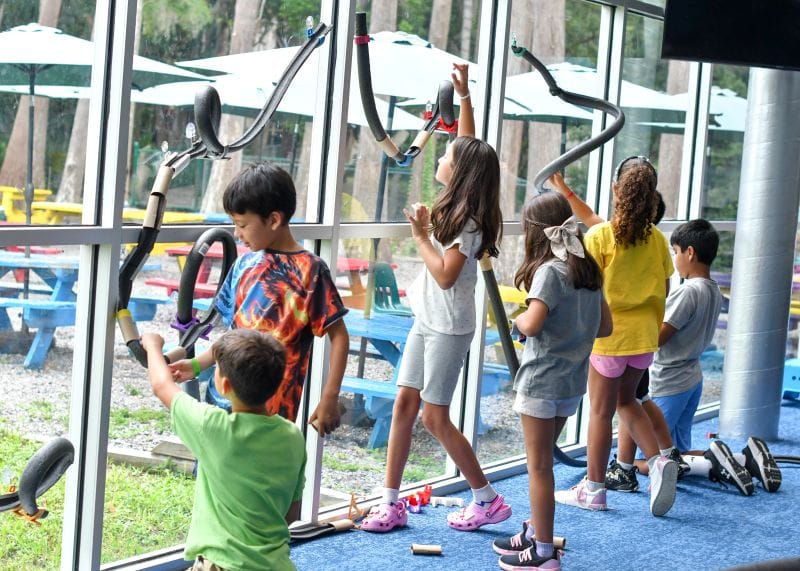
We do more than come up with fun designs; we use it to create solutions to problems we find. Once we were teaching a physics lesson that challenged students to create giant marble-run roller coasters with insulation tubing.
The kids wanted to try loops. Instead of using duct tape that would have ruined the tubing, my App Lab teachers and I worked together to design and 3D-print holders for the tubes.
The kids loved the holders! This simple project has led to multiple lessons on energy, physics, CAD and engineering design and inspired pure fun while learning.
We created the connectors, and the students have been active members of the iteration process. They have come up with new ways to catch the marbles, proposed new designs for additional connectors and tested prototypes.
Parents can use this same approach at home. You can build upon what your child learns at school by providing space for curiosity and access to tools. You don’t need to be an expert. You just need to ask questions, monitor and encourage.
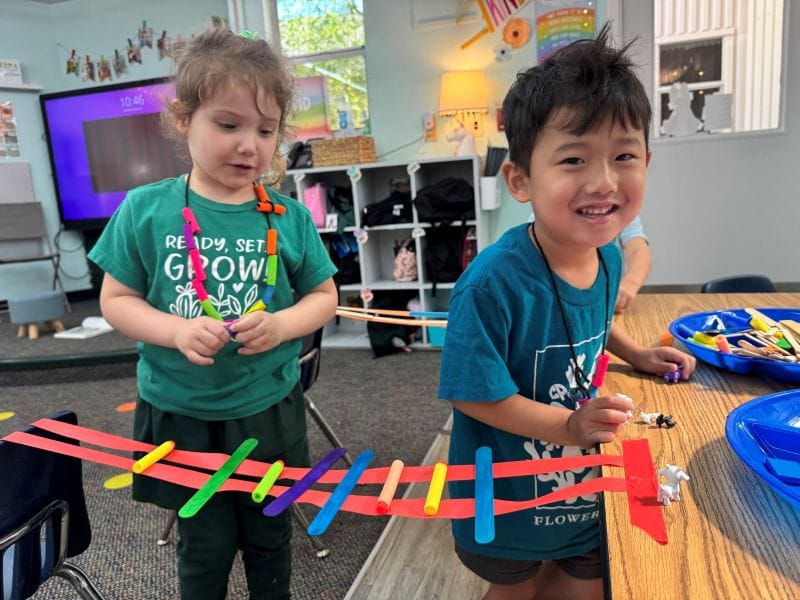
When they come home from school excitedly talking about coding, 3D printing or an engineering challenge, ask big, open questions. “Can you tell me how it worked?” “How could we use that at home/church/in the community?” “What are other ways you could use that skill?”
This approach teaches them a lot more than staying up until 2 a.m. in a papier mache marathon the night before a science fair project is due!
Here are a few ways you can help your student excel:
- When planning your next vacation, use AI with your child to create an itinerary.
- Code a funny birthday message for grandma.
- Instead of rushing to the store to fix small household problems (broken light switch covers, a lack of chip clips, missing board game pieces), encourage your child to create a solution with everyday objects, CAD or other skills.
- Walk through a digital simulator to help with tricky homework.
I like these online tools, which students can access at home with parent permission and supervision:
- Tinkercad.com – a free, online, beginner-friendly CAD program that allows for easy 3D modeling. It has extensions for circuitry and physics simulators.
- Scratch Jr. – an early childhood (kindergarten to second grade) coding app that is free in major app stores.
- Scratch.mit.edu – a free open sandbox-type coding site. With multiple tutorial lessons, anyone can start coding.
- PhET.colorado.edu – free science and math simulators that cover a huge range of topics from natural selection to fractions (our students love Energy Skate Park).
- An AI of your choice – do your research and choose the one that you are most comfortable with and help your child learn to ask the right questions.
Parent encouragement and support, combined with the school’s STEM education, provide a strong foundation for students in all subjects. It is clear that the world our kids are going to inherit will be vastly different from anything that has come before.
STEM provides students with a variety of ways to solve problems and think about the world. When they can tap into a STEM mindset, they open a huge toolbox full of practical skills that will help them tackle anything.

Jessica Wallen was the Guest Editor of Tampa Bay Parenting’s August 2026 issue. She is the Director of Instructional Technology at Corbett Preparatory School. She has her master’s degree in Language Arts Education. Her passion has always been science and when she was given the opportunity to learn robotics and start a FIRST LEGO League team, she was set on the path to becoming the STEM specialist she is today.
*Presented by Corbett Preparatory School | Originally published in the August 2026 issue of Tampa Bay Parenting Magazine