


A Lifechanging Food Allergy Treatment: Charlotte’s Story
Eating school lunch, birthday cake and carnival food were just a few of the items on 9-year-old Charlotte’s “Wish List.” For most children, they’re simple joys. But for Charlotte, who has severe peanut and tree nut allergies, they were potentially deadly.
“Some birthday parties made me cry because I couldn’t join my friends — they’d say, ‘Mmm, this is so good,’ and I’d be sad I couldn’t have it,” Charlotte says.
Food allergies changed everything for Charlotte’s family, from avoiding certain foods to constantly reading labels and worrying about cross-contamination.
“It changes your everything, it changes your world,” says Charlotte’s mom, Amy, a registered nurse at Johns Hopkins All Children’s Hospital. “Unless your kid has allergy, or you do, it’s hard for people to understand how it affects your life.”
Charlotte’s first reaction came at 15 months old after eating a raisin from trail mix containing cashews.
“She immediately had a rash on her face, swelling and she was vomiting,” Amy says. “Although I'm a nurse, my emotions kicked into overdrive… It was very scary to see my baby reacting.”
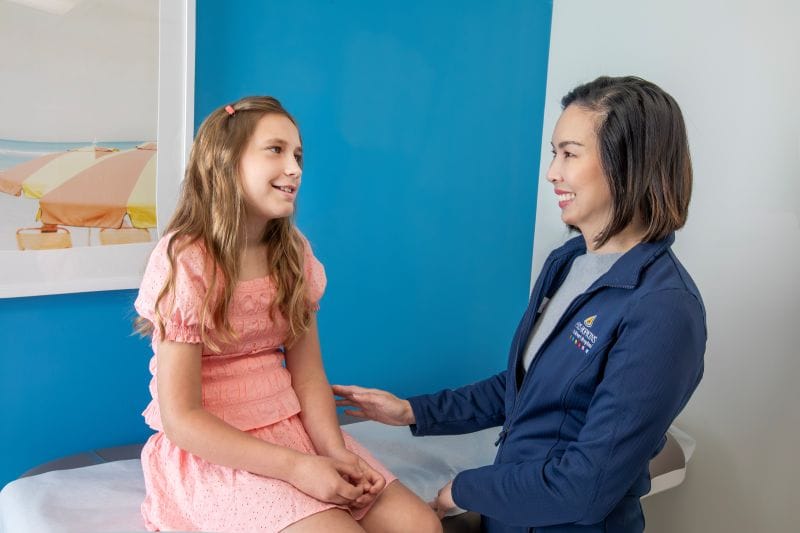
After years of strict avoidance and carrying epinephrine autoinjectors, Amy brought Charlotte, then 8, to the Food Allergy Clinic, where allergist Panida Sriaroon, M.D., recommended updated testing.
“Charlotte had already missed out on life events and activities because of her strict avoidance,” Sriaroon says.
Skin and blood tests confirmed allergies to peanuts, pecans, cashews, and pistachios. Oral food challenges showed she was also allergic to walnut and hazelnut.
“It is quite rare for someone to have so many nut allergies,” Sriaroon says. “I told Amy, ‘I’m not going to sugarcoat this: I don’t think she’s going to outgrow these allergies.’”
Then came a new option inspired by the landmark OUtMATCH study led by Robert Wood, M.D., at Johns Hopkins Children’s Center. The study found that omalizumab (Xolair), previously approved for asthma and other allergic conditions, helped prevent severe food allergy reactions.
After several months on Xolair, Charlotte began oral immunotherapy.
“Basically, we either avoid these foods strictly — or we expose her regularly to them in known, tiny amounts,” Sriaroon says. “This trains her body to not recognize these nut proteins as a threat… But it only works if she remains on the treatment.”
Now, Charlotte’s daily routine includes “four peanut M&Ms, one tablespoon of Nutella, one pistachio, one cashew, one pecan and one walnut.”
“I really enjoy parties I can go to,” she says. “I've gone to parties by myself, without my parents, but still acknowledging that I have to read labels.”
The treatment isn’t a cure, and Charlotte will always have food allergies. But it helps protect her from accidental exposure and allows her to live a more carefree childhood.
“I can’t even put into words how exceptional the staff is,” Amy says. “They were so patient with her, and I am just so appreciative of the time and energy they put into her.”
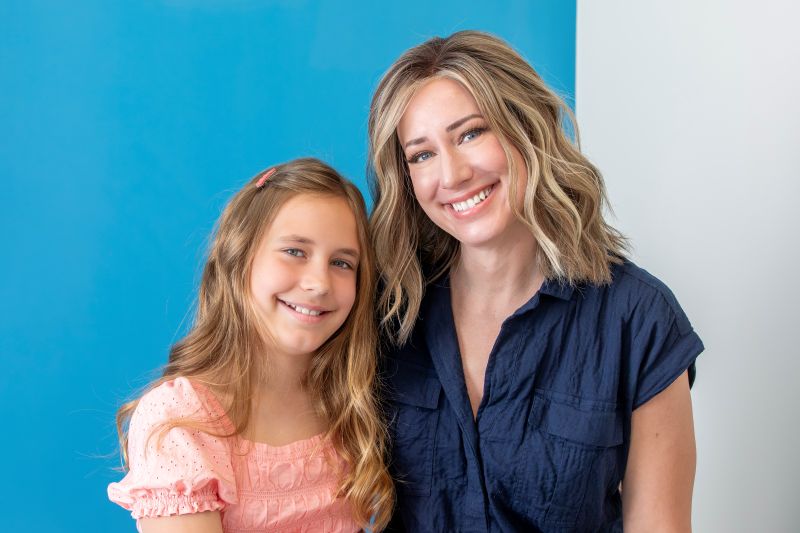
Today, Charlotte is checking items off her Wish List by trying new restaurants, dreaming of trips to Hawaii and Greece, and focusing on dance, math and reading. Someday, she hopes to become a dermatologist—or work for NASA.
For more patient stories and pediatric healthcare news, visit HopkinsAllChildrens.org/Newsroom.
Read More Inspiring Stories from Johns Hopkins All Children's Hospital:
- Celebrating Maddie’s Heart Milestone
- Tracii’s Miracle
- Johns Hopkins All Children’s Hospital Celebrates 100 Years of Healing
*Presented by Johns Hopkins All Children's Hospital | Photo credit: Allyn DiVito, Johns Hopkins All Children’s Hospital