


Friends, Books & a Little Less Screen Time
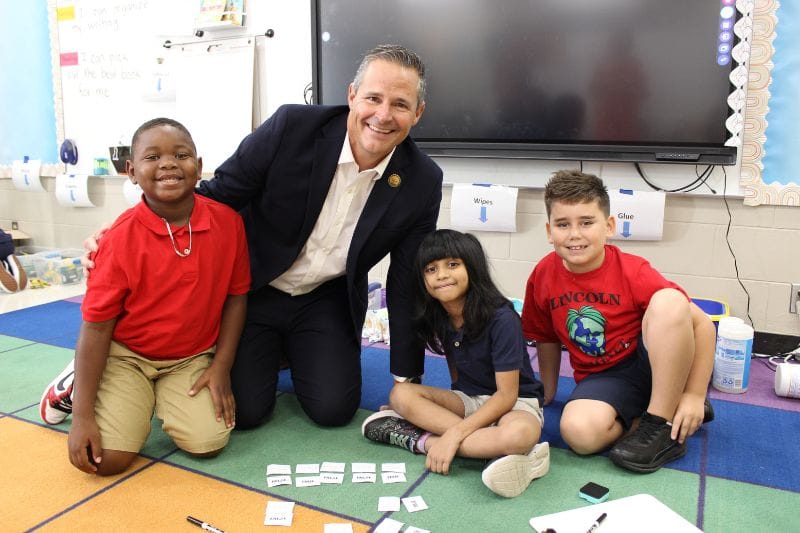
A few days before the start of the new school year, Hillsborough County Superintendent Van Ayres was filming a back-to-school video with a group of kindergarten and first-grade students. As the cameras were being set up, he made a little small talk with the children and asked what excited them most about going back to school.
“Making new friends!”
“Talking with my friends!”
“Getting to know my teacher!”
Not one of them said they were excited to go to school to be on a computer or play on a device.
And that simple conversation gets to the heart of why Hillsborough County Public Schools is changing the way it approaches screen time for its youngest students.
Based on research about how young children learn best, HCPS is making changes designed to reduce screen time in kindergarten through second grade. As part of the new Screen Time Guidance, programs such as i-Ready, Amira and Imagine Learning will no longer be used as part of daily classroom instruction in grades K-2.
Instead, students will spend more time reading printed books, writing, discussing ideas and participating in hands-on activities that support language and literacy development.
Research on learning and development shows that young children build language, vocabulary and reasoning skills through conversation and interaction. Too much screen exposure can also reduce opportunities for sustained attention and deep thinking. Young students benefit from movement, exploration, multisensory experiences and collaboration.
Related: The Science of Beauty – in Hillsborough County Public Schools
In other words, children between the ages of 5 and 7 need opportunities to talk, explore, ask questions and engage with the people around them. They need to hear their classmates’ ideas, look at their teacher, turn the pages of a book and work through problems together. Those experiences are a fundamental part of how young children learn.
Superintendent Ayres says the response from teachers has been overwhelmingly positive.
“Every elementary school I’ve been in, a teacher has come up to me and told me what a difference this will make in their classroom,” Ayres said. “Our teachers want to engage with their students. They want the collaboration and discussions among their young students. These guidelines will support them.”
Of course, going low-tech does not mean going no-tech. Technology is an important part of everyday life, and children need to learn how to use it appropriately. Devices will still be used when they serve a specific educational purpose. The goal is to make sure technology is being used intentionally, not simply because it is available.
The district is also taking into account how much screen time children may already be getting outside of school. Reducing unnecessary screen time during the school day can help create more room for reading, physical activity, play, family time and face-to-face interaction.
And perhaps that brings us back to those kindergarteners in front of the camera.
When asked what they were most excited about when they returned to school, they didn’t talk about apps or devices. They talked about people.
They were excited about making friends. Talking with friends. Getting to know their teacher.
For our youngest learners, that may be the best reminder of all: School is a place to discover, wonder, move, talk, listen and learn alongside other people.
Because sometimes, the most important learning happens when the screen is off and the conversation begins.
More from Hillsborough County Public Schools:
- A Hub of Wellness and Growth: An Inside Look at Hillsborough County Children’s Board Family Resource Centers
- Teacher to Know: Christi Atkinson, Hillsborough County Public Schools Teacher of the Year
- Children’s Network of Hillsborough County: Growing Families Through Adoption Across the Tampa Bay Area
Originally published in the September 2026 issue of Tampa Bay Parenting Magazine.
Images courtesy of Hillsborough County Public Schools