


Fossil hunting in Florida lands BIG find and you can make a discovery, too!
An amateur fossil hunter who found a record-breaking giant armadillo fossil shows how everyone can indulge in this hobby!
Fossils are an important link to our past that help tell the story of how our planet has changed and how life has adapted — or didn't. They’re also just really cool to look at and find!
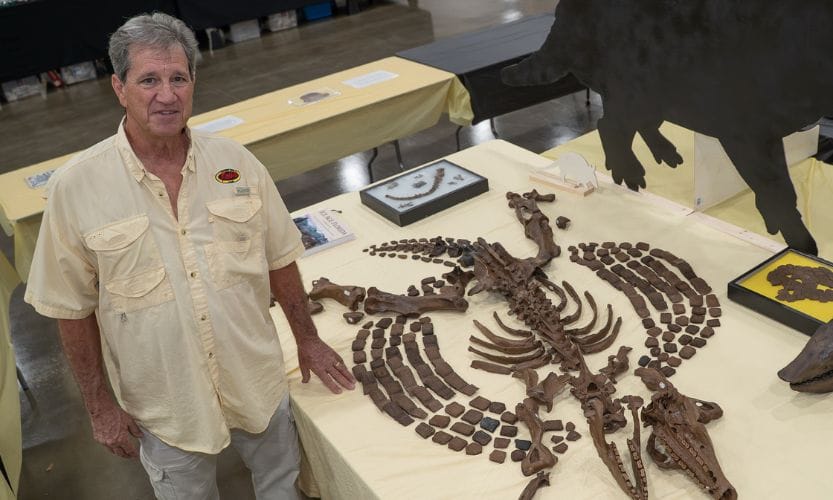
We recently met up with Dr. Bob Sinibaldi with the Tampa Bay Fossil Club, who made an incredible discovery in north Florida’s Steinhatchee River in June: the most complete giant armadillo from the Ice Age ever found in North America and possibly even the world! It’s believed the creature roamed Florida 500,000 years ago during the Pleistocene Ice Age before it met its demise in a sinkhole.
Here’s what’s cool and relatable. Dr. Sinibaldi was actually an adaptive physical education teacher and was even awarded National Adaptive PETeacher of the Year in 2011. But his other passion is fossil hunting. While he doesn’t hold a paleontology degree, he’s made some significant finds over the last 35 years, and he’s proof that even amateurs can make a big impact in piecing together Florida’s prehistoric past.
Related: NEW AT MOSI Dinosaur Discoveries: Ancient Fossils, New Ideas
First, let’s talk about this prehistoric creature and the significance of this find.
Dr. Bob Sinibaldi: This is a giant armadillo, and we're estimating it weighed 500 pounds. Today's armadillo weighs about three to five or six pounds, so it's about 10 times the size of today’s armadillo. It’s the most complete giant armadillo ever found in North America, and it might be the most complete one ever found in the world. So it was a cool find.
It was found in a northern Florida river, in a clay deposit they believe is a prehistoric sinkhole. The river is now eroding into it. I found it when the very first claw on the foot came out, and I followed it up the bank and into the clay, and so far I’ve got about 98 percent of it.
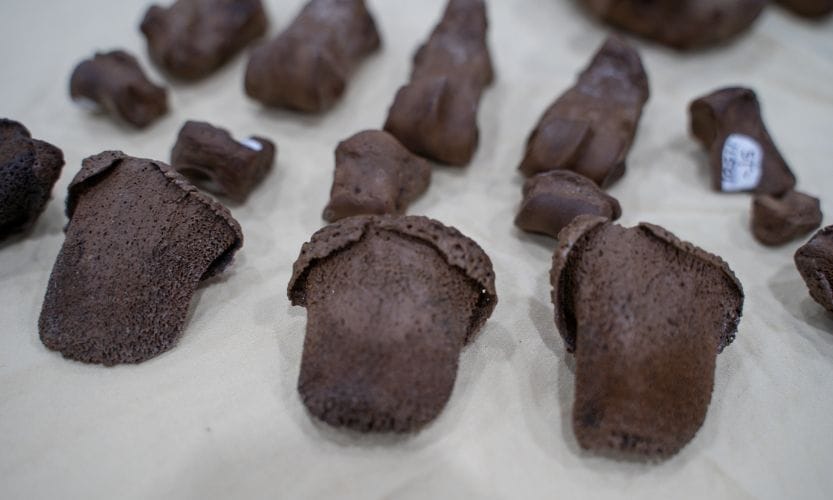
It wasn’t easy scooping this fossil out of the river. You mentioned it was pretty hard to see when you were diving to recover this giant armadillo 20 feet below the river’s surface.
Dr. Bob Sinibaldi: Right, visibility was really low, so when I first found it, I could kind of see a little bit, but as I continued to work the clay, the clay got softer and softer, and it clouded up. And then each time I went back, as soon as I landed on the bottom, a big cloud of clay would go up, and I’d just turn the dive light off and work in complete pitch blackness, and just totally by feel. I had a crate next to me. As I found something, I put it in the crate.
At what point did you realize this was actually a pretty significant find?
Dr. Bob Sinibaldi: So when I started finding the back leg bones, I'm like, this is pretty significant. But then on the third dive, I found the entire backbone. On that third dive, on the second tank, I found the jaws. And on the third tank, I found the skull. And once you have the jaw and the skull and you have complete articulated back legs and vertebrae and the ribs, you know that it's going to be significant.
As an amateur fossil hunter, you work closely with researchers at the University of Florida. What was their reaction?
Dr. Bob Sinibaldi: I sent the pictures to the University of Florida, and they were just amazed. They thought it was a fake replica. They were like, “Holy smokes, that’s real?” I'm like, “Yeah, that's exactly the way it looks.”
The University of Florida will inherit this fossil after this show [Tampa Bay Fossil Club’s Fossil Fest] because they're the governing body. They've been very, very supportive of the amateur community because we're the ones finding this stuff. They don't have any divers on their staff, so they're not going to get stuff out of the rivers.
The amateur community is the one that finds stuff and sends it to them to study. Even before I found this, I had probably donated maybe close to 100 finds.
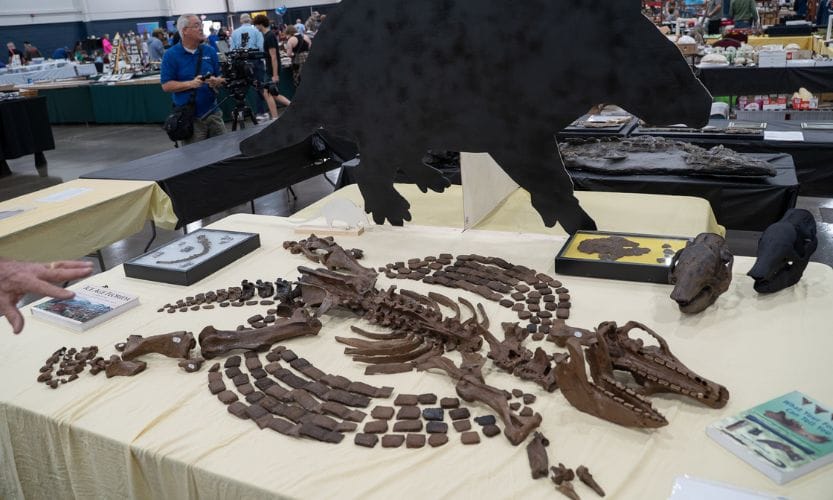
You don't have a paleontology degree, but you’re proof that you can still become an amateur fossil hunter in Florida and make scientifically significant finds.
Dr. Bob Sinibaldi: There's a permitting system that allows amateurs to hunt for stuff in rivers and or dive and or screen. You can always look at your own property if you want to dig up your backyard. The key is that you educate yourself. But if you belong to a club [like the Tampa Bay Fossil Club], you go to monthly meetings, you learn more and you read books. As a hobby, I just got hooked on it.
The Tampa Bay Fossil Club is one of the largest fossil clubs in the world, and your family can join for $28, which gets you access to monthly meetings, fossil dig field trips and more!
So we don’t have to travel far to find fossils!
Dr. Bob Sinibaldi: In Florida, we have mostly Ice Age fossils. We have a lot of marine fossils, shark teeth from when we were underwater. If you go out west, you're going to have a chance of finding dinosaur fossils. Even up north, New Jersey and Pennsylvania have some dinosaurs. But there are fossils all over the world. If you go to any country in the world, you have a chance of finding fossils.
For kids out there who want to do what you do, what’s your advice?
Dr. Bob Sinibaldi: Read as many books as possible. And now, of course, you've got the internet, which I didn't have as a child. You have a whole bunch of other resources where you can learn about paleontology and archaeology, which is the study of human remains and human artifacts. However, if you just want to do it as a hobby, you still have to learn about it and do it ethically. It's not about how much money you're going to make or buying or selling. Amateur, the actual definition, means someone who does it because they love doing it.
Want to go BIG and search for dinosaur fossils? The paleontologist who found Big John the triceratops, which is on display at Glazer Children's Museum, is booking dinosaur dig tours this summer.
Related Stories You Might Love:
- The Play List: Great Explorations Children’s Museum in St. Pete
- Tampa Bay Summer Camps
- The Science of Beauty – in Hillsborough County Public Schools
Originally Published in the May 2026 Issue of Tampa Bay Parenting Magazine | Images courtesy of