


5 Cool Things to See at the Mysteries of the Nile: Ancient Egypt, now on display at the Tampa Museum of Art
First, we want to start by saying there are way more than five cool things to see at “Mysteries of the Nile: Ancient Egypt,” which has more than 117 objects on display to immerse you in the everyday lives of ancient Egyptians. But we wanted to narrow it down to a few things to give you a glimpse inside this exhibit, which is the first of its kind in the city of Tampa.
The exhibit features a combination of artifacts from the Tampa Museum of Art’s (TMA’s) own collection, private collectors and the Royal Ontario Museum in Toronto, Canada. The loan from the Canadian museum makes this exhibit especially unique, according to Dr. Branko van Oppen, the Richard E. Perry Curator of Greek and Roman Art at the Tampa Museum of Art.
“Back in the early 20th century, their first director was an Egyptologist who excavated in Egypt, so I knew that a lot of the objects that they have in their collection from that early period, the first 50 years or so, were all objects that were legally excavated and came from official excavation campaigns,” says Dr. von Oppen. “So that adds another depth to how prominent that collection is.”
For Dr. von Oppen, this exhibit is also a full-circle moment. Not only did he spend many years bringing this exhibit to fruition, but it’s also a nod to his childhood passions: “Since I was a child, I have been in love with ancient Egypt. So when I had this opportunity, I jumped on it. It was marvelous.”
It just goes to show that you never know how childhood passions can help give your career a boost in adulthood!
The oldest items
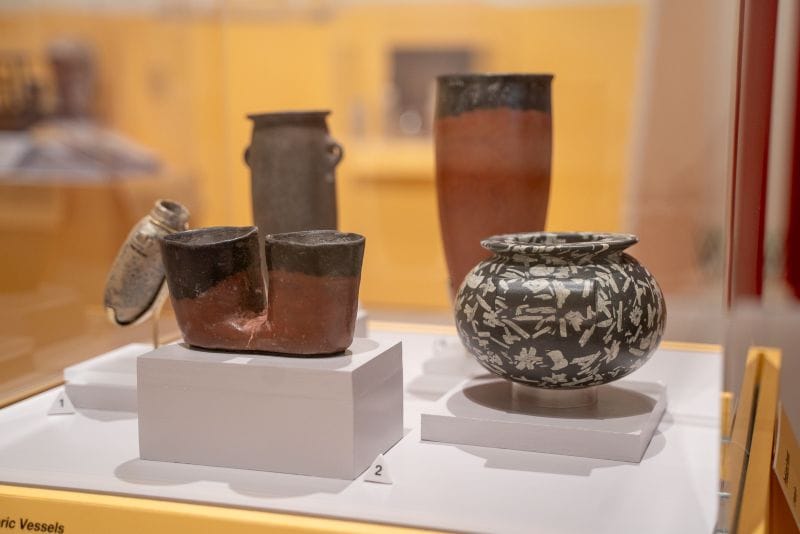
These vessels date back to the predynastic and protodynastic eras before the time of the pharaohs, about 7,000 years ago. This was right before hieroglyphs, their writing system, were invented and just before ancient Egypt became the civilization we know so well today.
“I just love showing them,” says Dr. von Oppen. “Even though they are from different regions and in different materials, they show that in 5,000 BCE, the Egyptians were already so talented at making such beautiful vessels.”
Groundbreaking discoveries.
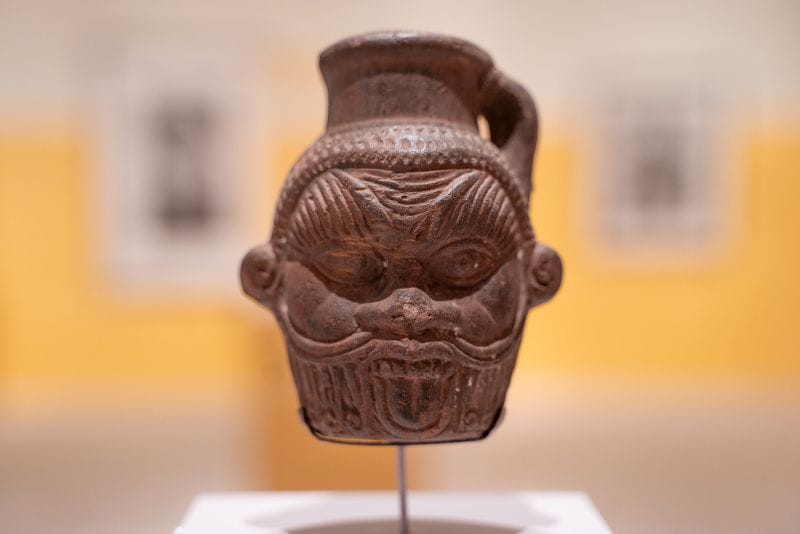
This Bess mug is owned by TMA. Remnants of contents inside were scientifically analyzed a few years ago, and the results were astounding. It’s believed that the mug and its contents were used in a ritual context to protect pregnant women and infants. The news received international attention after the research was published in Nature’s “Scientific Reports.”
Mysteries yet to be unraveled
This linen bag is also part of TMA’s collection. But here’s what’s really neat — it had been sitting on the shelf for decades before it was rediscovered.
“No one remembered that we had it, but on the box it was written what was inside: ‘This bag was found in a pit in the Valley of Kings by an excavation campaign of the Metropolitan Museum of Art in 1905,;” says von Ocken. “That pit was filled with refuse, and the name of King Tutankhamen was also in that pit. So this was refuse from his burial. Fifteen years before [King Tut’s] the tomb was found, it was the first time that Egyptologists heard about this pharaoh.”
He added that It’s possible the contents inside may contain genetic material from King Tut. The museum is waiting on results.
Just like us
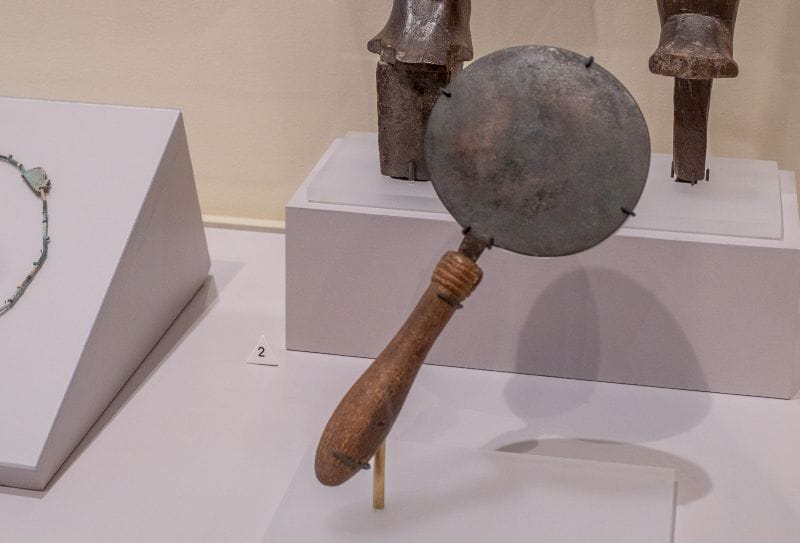
You’ll also spot a bronze mirror, a wooden comb and even eyeliner known as kohl. There’s a plate that was used to grind the material to make kohl, a jar to store it and a stick to apply it. Kohl was used not only to enhance appearance, as we do today, but also by ancient Egyptians to protect their eyes from the sun’s glare and infections.
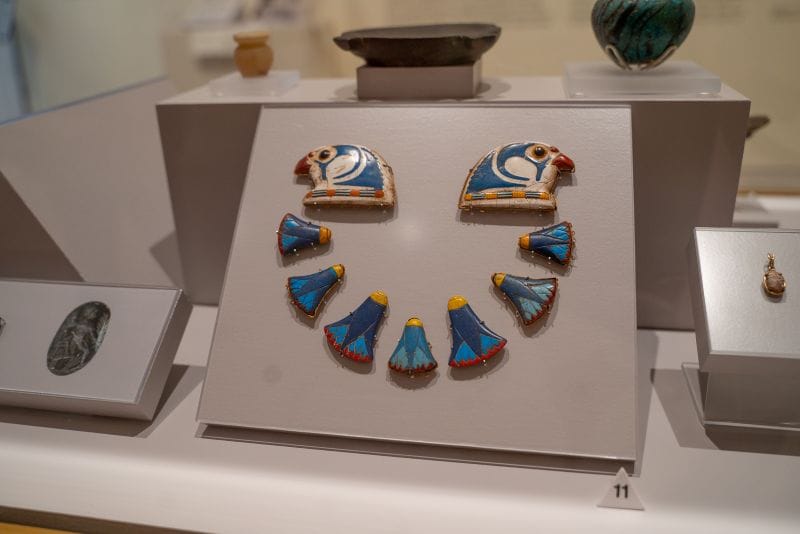
You’ll find several pieces of jewelry on display that may have been worn during life and also placed on mummies for their journey in the afterlife. Each piece had symbolic meaning to the Ancient Egyptians, such as this glass necklace featuring water lilies and falcon heads, symbols of regeneration.
Bugs
There are several scarabs in this exhibit, insects related to the dung beetle that roll a little ball in front of them that grows. “The Egyptians saw in that the sun rising. So the scarab is a guardian of the sun at dawn and dusk,” Dr. von Oppen explains.
A unique relief.
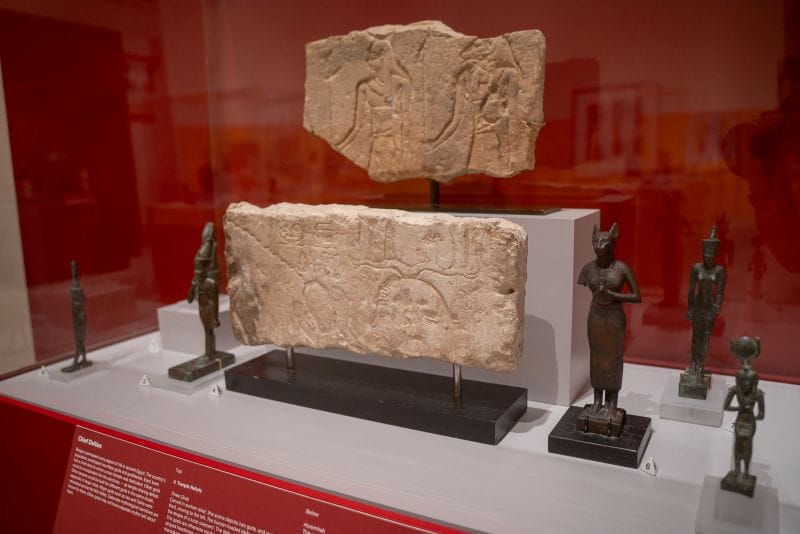
This fragment of a relief is the only one outside of Egypt that depicts the Pharaoh Horemheb, who reigned from 1319 to 1292 BCE. It shows him making an offering of fresh water to a deity, but rather than pouring down, it is pouring up.
Did you know…
Around 15,000 Hillsborough County third graders will get to experience this exhibit this year, along with 11 other exhibits at the TMA as part of a field trip program funded by the referendum-funded Millage Field Trip Program. Other grade levels will visit places like MOSI, Glazer Children’s Museum and Muma Biz Town at no cost to the schools or families.
Plan your visit: tampamuseum.org
Originally published in the August 2026 issue
Looking for more fun things to do in Tampa Bay? Check out our top picks of weekend events!