


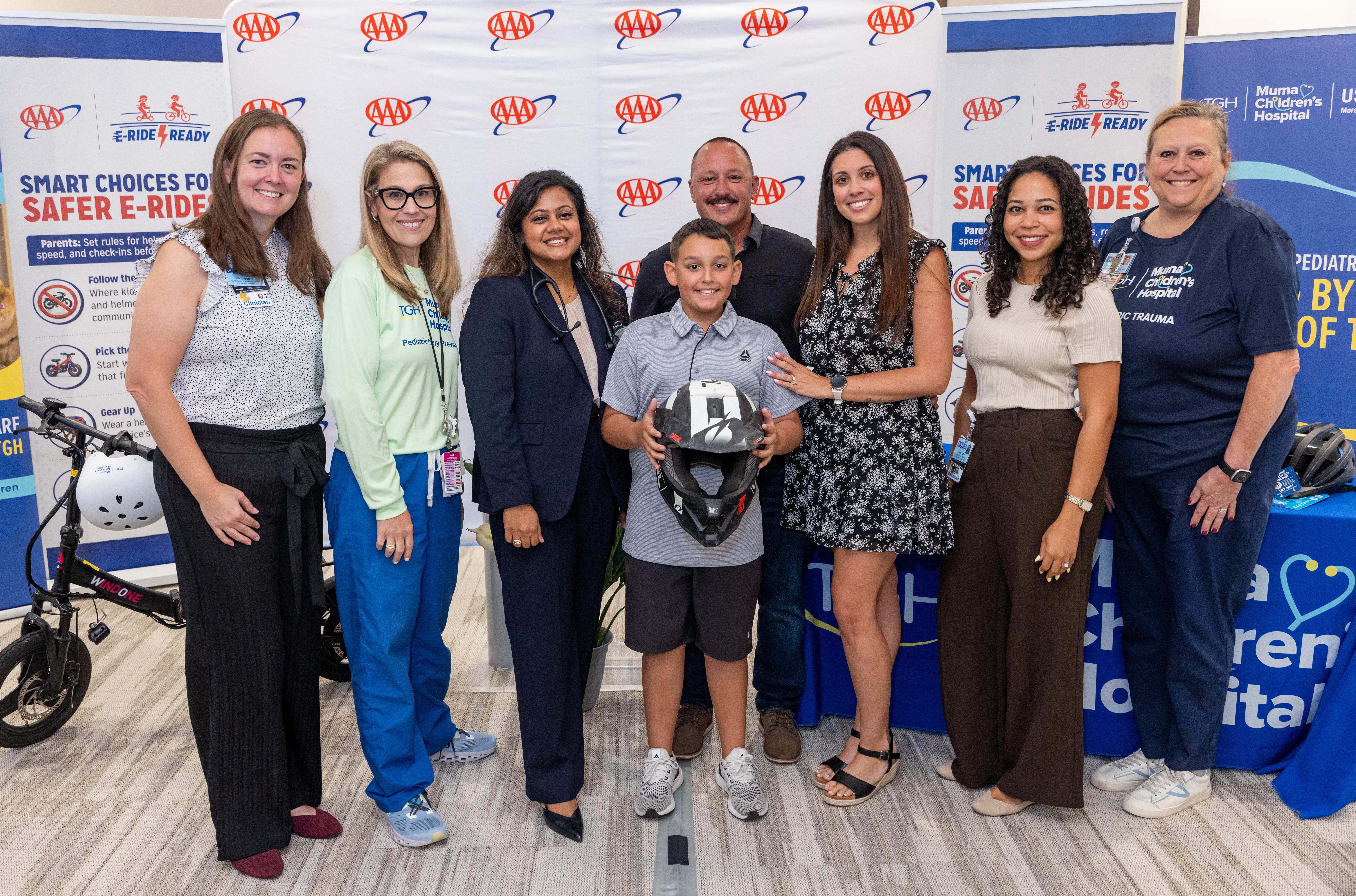
AAA Launches New E-Ride Ready Safety Campaign
“On April 11th, I got the worst call that any parent could expect,” Kaitlyn Shepard, Pasco County mom, recalls. That was the day her 9-year-old son Dylan was severely injured in an e-bike crash while riding with his dad in their neighborhood.
Dylan was doing everything right: He was wearing a proper helmet and protective gear and riding under supervision with his dad. But neither of them could have predicted what would happen — his bike struck debris, causing him to flip over the handlebars of his e-bike and knock him unconscious.
As a parent, it’s hard to fathom what his dad, Chris Shepard, was feeling as he turned around to see his son lying motionless on the ground. “I called his name three times, and he still didn't wake up. I mean, your heart sinks,” said Chris Shepard. He was eventually able to rouse Dylan and take him to a local ER, where it was determined he needed to be transferred to Muma Children’s Hospital at Tampa General Hospital, a Level One Pediatric Trauma Center.
“He had multiple rib fractures. He had pulmonary contusions, which are bruising around the lungs. He had some road rash on his abdomen,” explains Jade Kumar, the pediatric surgeon and trauma medical director at TGH’s Muma Children’s Hospital who helped care for him. “And then his worst injury was that he had a spleen laceration. So the spleen is an organ that is very soft and can get injured in blunt trauma, such as e-bike and motor vehicle accidents. And it's dangerous because you can bleed to death from the spleen.”
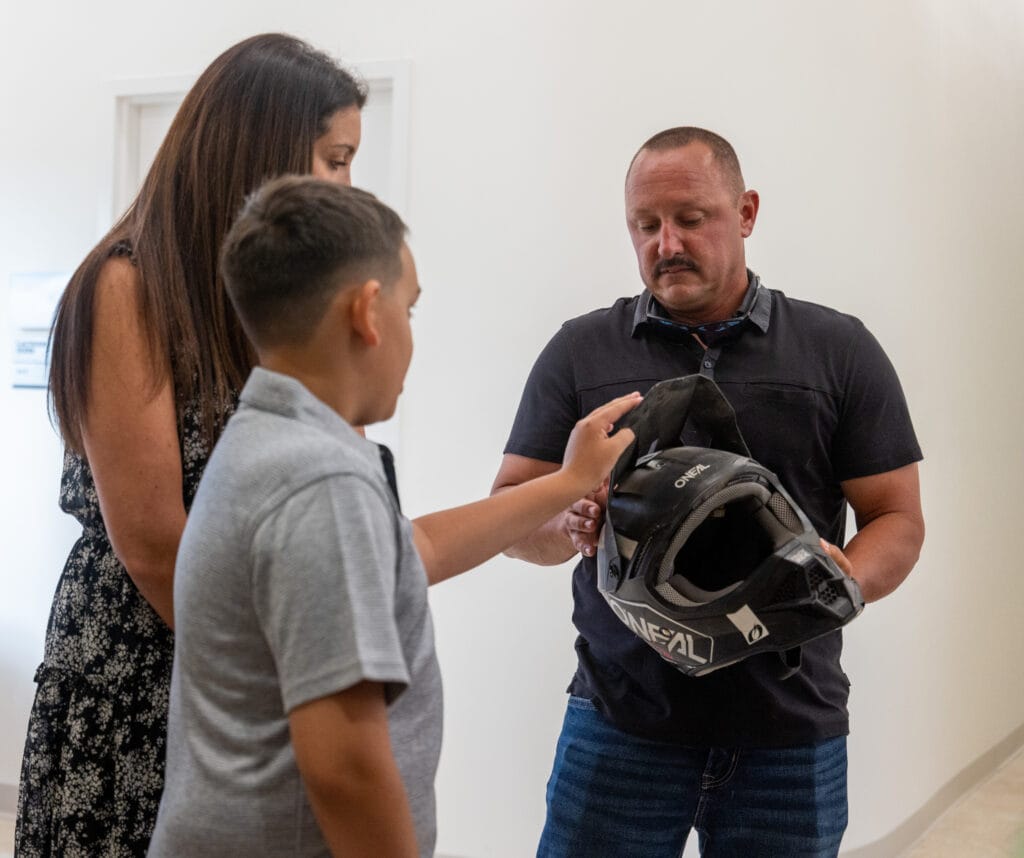
Fortunately, thanks to the quick action of the medical team and his helmet, Dylan was able to make a full recovery, but he still required a stay in the ICU and rehabilitation. Unfortunately, Dylan’s story is not uncommon, and some kids do not survive. His parents and doctors credit his helmet for saving his life.
“The most important message we want to take away from this story is the importance of wearing a helmet. I don't think the outcome would have been nearly the same had Dylan not been wearing the protective gear,” says his mom.
Dr. Kumar echoes this message. “It really comes from my heart when I say that we can fix broken bones, we can treat road rash, we can fix the spleen, we can do a lot of things. Even with a helmet, or without a helmet, if your brain gets injured, a lot of it is kind of out of our hands.”
AAA’s E-Ride Safety Guide
It’s stories like Dylan’s that prompted AAA-The Auto Club Group to launch its new E-Ride Safety Guide for parents and caregivers, educating them about the risks associated with riding e-bikes and e-scooters and providing resources to help them talk to their kids about safe riding habits. The guide is free and available online and in print.
“For parents, there's a lot to think about, particularly when we're being asked to purchase an electric bike and a scooter for our child,” says Mark Jenkins, AAA public relations manager in Tampa. “There's a lot to consider, from the type of e-ride, the safety gear and then knowing where it's legal to ride. And that can get confusing very quickly, which is why AAA developed a resource for parents.”
Jenkins says they also understand the reality that e-rides are not going anywhere. “From AAA's perspective, it's hard to say, ‘don't ride these.’ Our role here today and our entire intent is to make sure that parents have the resources they need to make informed decisions to keep their kids safe if they do decide to ride these.”
The guide also includes a script for a 5-minute safety conversation to have with your child before they get on their e-bikes or e-scooters. Among the non-negotiables to agree on: Wear a helmet every ride, fully strapped and fitted correctly.
Not All Helmets are Created Equal
While Florida state law requires riders under 16 to wear a helmet, not all helmets are created equal. It’s another issue AAA’s E-Ride Safety Guide addresses for parents.
“Standard bicycle helmets are not designed for the higher speeds many e‑rides reach,” said Jenkins. “On devices capable of traveling up to 28 mph, riders should consider helmets designed for higher‑speed impacts, such as those meeting the NTA 8776 standard. At speeds above 28 mph, medical experts often recommend a motorcycle helmet, which offers full head and face coverage.”
Thankfully, Dylan was wearing a motorcycle helmet. The family brought it with them as AAA announced the E-Ride Safety Guide in Tampa.
“You can see where he hit here, and we actually found gravel that was jammed in this helmet right here.” Dylan’s dad says, pointing to the damaged helmet. “We’re just very thankful that he was wearing this. Thank our lucky stars.”
Why Helmets and Speed Matter
Dr. Kumar says the hospital has seen an increase in e-ride-related injuries in the last year. What’s most concerning is the severity of the injuries.
“Head and facial traumas are among the most common injuries that we see compared to traditional bicycles,” says Dr. Kumar. “Children riding e-bikes experience twice the rate of traumatic brain injuries, nearly five times the rate of bleeding around the brain, and three times the rate of facial fractures. These are not scraped knees and bruises. These are injuries that require hospitalization, intensive care, emergency surgery, months of recovery and even death. Oftentimes, these are very life-changing events. So why is this happening? One major factor is speed. As speed increases, so does the severity of injury.”
“The second major factor is helmet safety, or more accurately, the lack of proper helmet use,” she says. “Research shows properly rated helmets reduce the risk of head injury as much as 60 to 90 percent. Yet many injured riders are not wearing a helmet at the time of their crash. We can fix broken bones, but we can't fix the brain.”
Dylan hopes that by sharing his story, kids will be encouraged to wear the proper helmet. “They need to have their proper gear on. Some kids think they're ugly. They don't like them. They don't look cool. They think they're big, so they don't want to wear them. But I like them. In my opinion, they look cool,” smiled Dylan.
Download AAA's E-Ride Safety Guide here.
*Originally published in the July 2026 issue of Tampa Bay Parenting Magazine.