


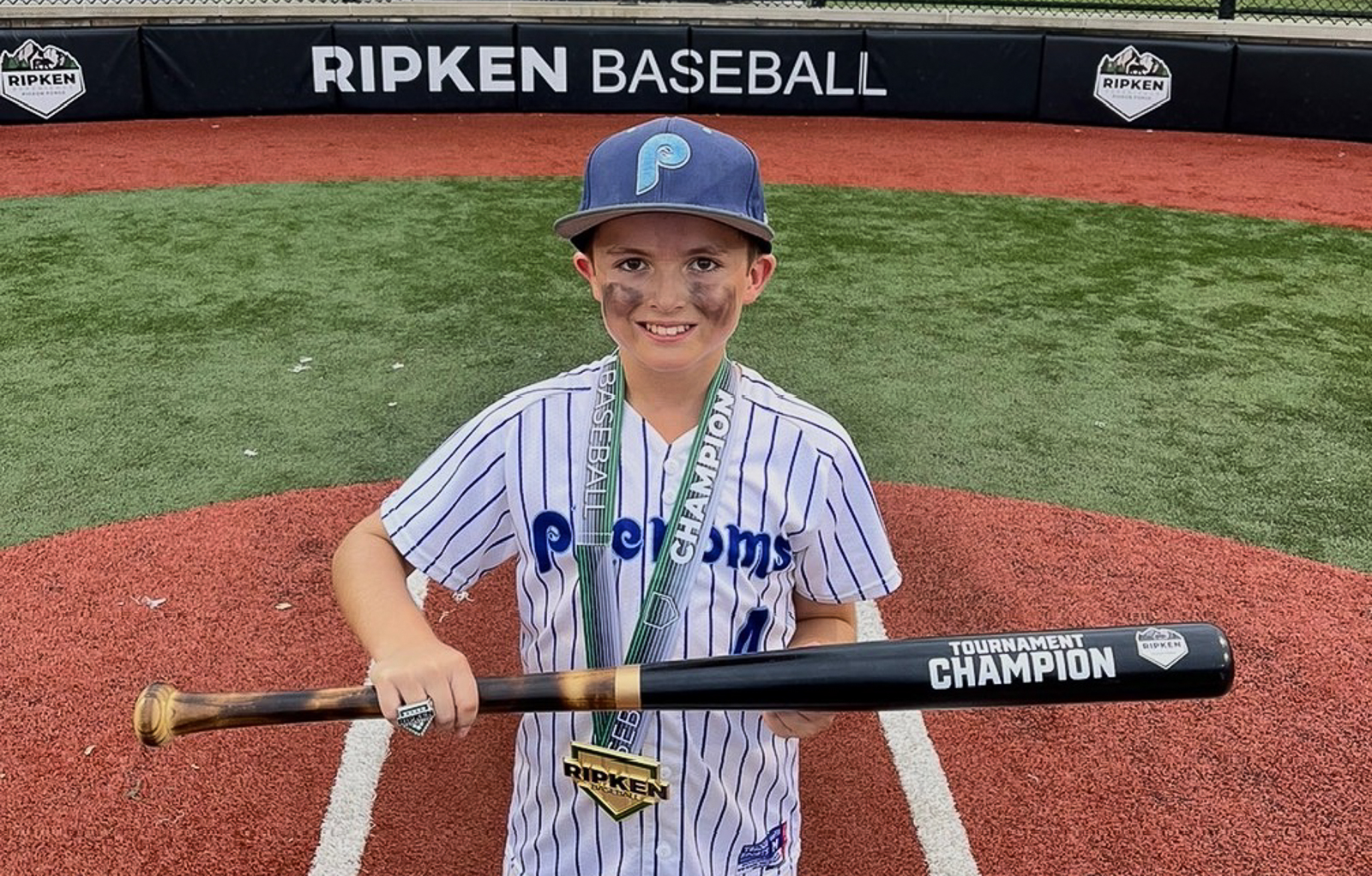
Second Chance Act, Florida’s new EKG screening mandate for high school athletes, saves local teen
There are many things we know about Keland Lamke, a Tampa Catholic 9th grader.
We know he loves playing baseball, being around his friends and family, and, like most kids his age, playing video games. We also know that he has a big heart.
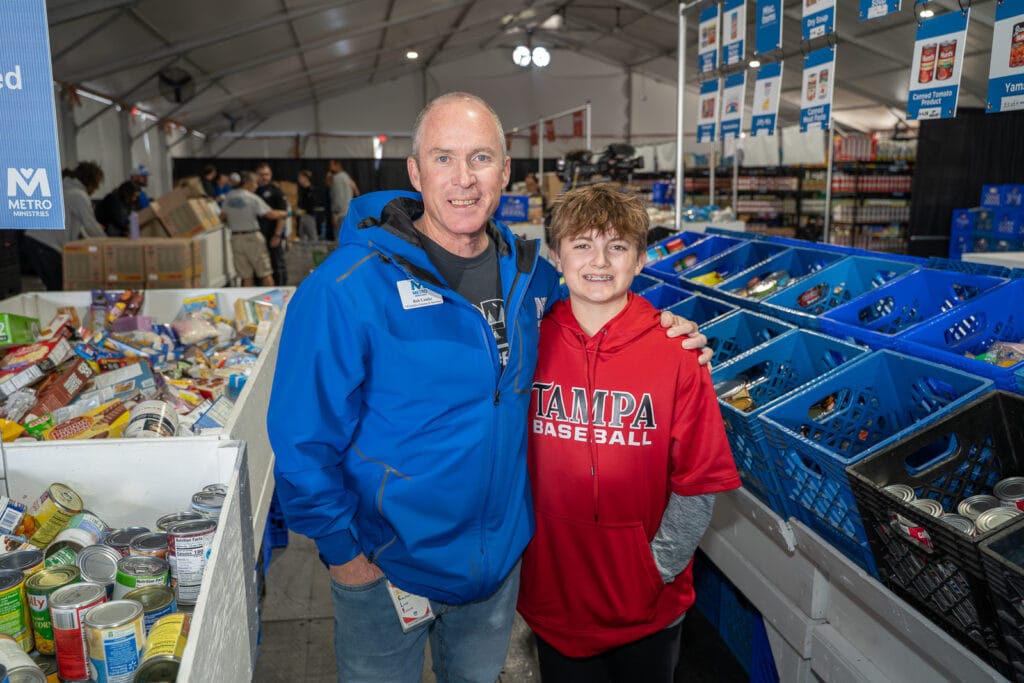
We featured him in our December 2025 issue (page 33) when he used money he saved throughout the year to fill shopping carts with donations for the Metropolitan Ministries Holiday Tent.
And then there’s what we didn’t know about his heart.
In fact, no one knew until he received an EKG screening required by the Second Chance Act, a new state law that took effect in July that mandates student athletes entering the ninth grade receive at least one EKG (electrocardiogram).
For the Lamkes, it was supposed to be a routine screening to check the box. They never imagined it would reveal an undiagnosed heart condition.
The Lamke family is now sharing their story to raise awareness about this simple procedure that can potentially save more lives, not just those of young athletes.
TBPM: First, tell us about Keland! We know him as an active kid with a big heart who gives back to our community! But what else do we need to know?
Rob Lamke: Baseball is a huge part of his life. He loves the game, the competition, his teammates, and being part of something bigger than himself. But there is a lot more to Keland than baseball. He has a genuinely big heart for other people.
Giving back to his community has always been important to him, and he is the kind of kid who wants to help when he sees an opportunity to make a difference. He is also funny, social, determined, and incredibly resilient.
What has been remarkable to watch is how he has taken something unexpected that happened in his own life and decided that maybe it could be used to help someone else.
When a routine EKG required for high school athletics uncovered a heart condition that our family had no idea was there, Keland suddenly found himself with a story that could potentially save another child’s life.
Instead of wanting to keep that experience entirely private, he has been willing to talk about it. He wants other kids to understand that you can look healthy, feel healthy, play sports, and still have an undiagnosed heart condition.
That’s probably the most important thing to know about Keland: he doesn’t want his heart condition to define him. He’s still Keland the baseball player, the friend, the son, the teenager who wants to live his life.
But if sharing what happened to him encourages another family to get their child screened, or ultimately helps another child get diagnosed before something tragic happens, then he’s willing to use his voice to do that.
TBPM: Baseball has been a big part of your lives as a family. Tell us about his passion for the sport.
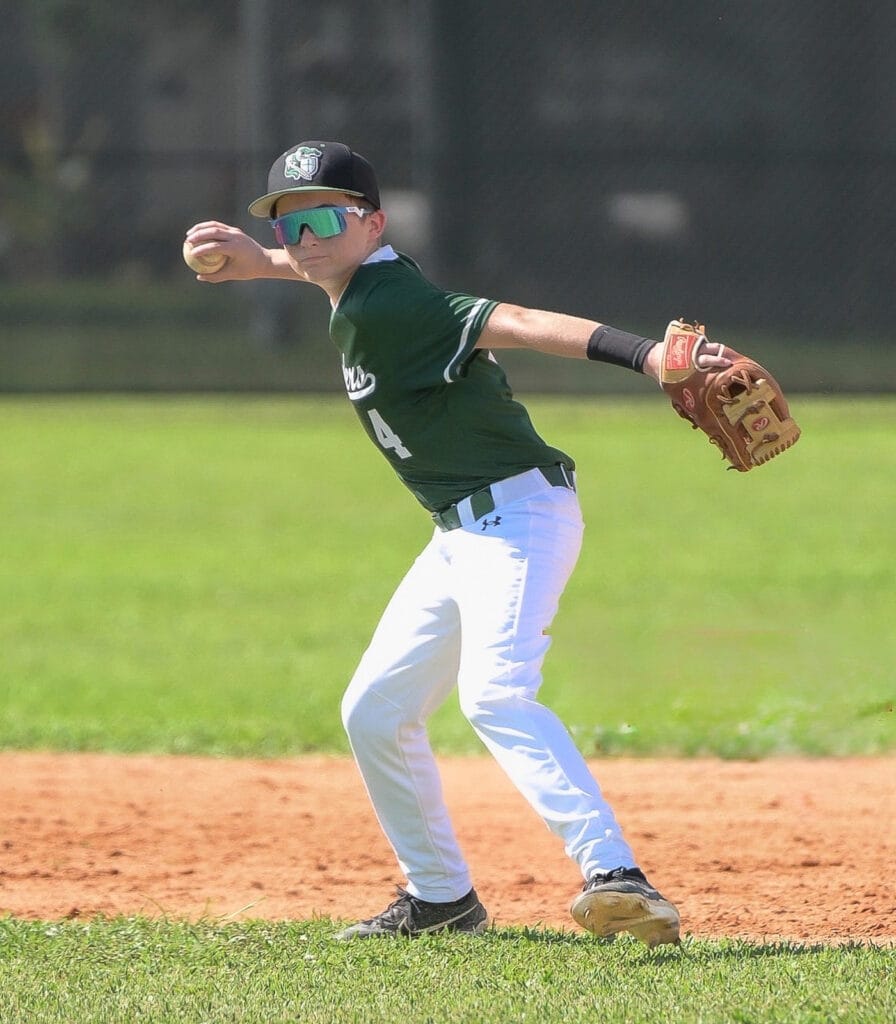
Keland Lake: I enjoy baseball because it makes me feel healthy and accomplished. I enjoy being a part of a team at Tampa Catholic and always working to be a better player. Maybe I could be the first MLB player with a pacemaker.
Rob Lamke: Baseball has been part of Keland’s life for as long as we can remember. He loves everything about the game: the competition, his teammates, the challenge, and constantly working to get better.
Some of our best memories have been made at the ballpark. For Keland, though, baseball is more than a sport. It has taught him discipline, perseverance, teamwork, and how to keep going when things don’t go as planned. That became even more meaningful after his heart diagnosis.
Being able to continue playing the game he loves reminds all of us not to take those ordinary moments walking onto the field, putting on the uniform, or cheering from the stands for granted.
TBPM: When you went in for the EKG, were there any concerns leading up to the appointment?
Keland Lamke: There were no concerns. I never had any of the symptoms they asked me about, like dizziness, feeling faint, tired, not being able to keep up with my peers, chest pain, or shortness of breath.
I had the EKG only because it was required with the new Second Chance Law that started this summer.
Rob Lamke: If Keland were in a different grade level in high school and had played sports the year prior, we never would have done an EKG because he seemed completely healthy.
We are eternally grateful that this law came into effect when it did. We are now hopeful that it will expand to other students, not just athletes.
TBPM: What did the EKG reveal?
Rob Lamke: The EKG revealed that Keland has a third-degree, or complete, AV block, a heart condition his doctors believe is likely congenital, meaning he may have been living with it since birth without us ever knowing.
The AV node is essentially the electrical connection between the upper and lower chambers of the heart.
In Keland’s case, those electrical signals are completely blocked, so the lower chambers have to generate their own backup rhythm to keep his heart beating. That backup rhythm is much slower than a normal heart rhythm, which is why his heart rate can fall into the 30s.
What was hardest to comprehend was that this wasn’t necessarily something that had suddenly developed.
Keland may have been playing baseball, running the bases, going to school, and living a completely normal childhood with this condition for years.
There were no obvious warning signs. He looked like a healthy, athletic 14-year-old and that’s exactly what we believed he was. Without the EKG, we may have continued having no idea that anything was wrong. That realization completely changed the way we think about cardiac screening in children.
TBPM: When you first heard the news, what was your initial reaction?
Rob Lamke: The first reaction was complete shock. We honestly thought it was a false positive reading. Maybe he was anxious. But after the second EKG when the cardiologist came in to explain what was going on, panic set in.
Then came fear. As parents, hearing the words “complete heart block” associated with your child is terrifying, especially when you begin to understand what it means and realize he may have been living with it for years without anyone knowing.
We also kept thinking, “What if we hadn’t gotten that EKG?” That question still stays with us.
We walked into the screening thinking it was simply another requirement for him to play high school baseball. We walked out knowing something about our son’s heart that could ultimately protect his life. There was also an overwhelming sense of gratitude.
We were scared, but we had been given something many families never get… the opportunity to know.
TBPM: How will the condition be treated, and what are the next steps?
Rob Lamke: Right now, Keland has been cleared by his cardiac team to continue playing baseball, which was incredibly important to him. Although he has complete heart block, his doctors feel he can safely remain active while being closely monitored.
The next step will be a cardiac MRI in October, which will give his doctors a more detailed look at the structure and function of his heart and help guide his treatment.
After that, Keland is expected to have a pacemaker implanted in November. The pacemaker will help regulate his heart rate and ensure that his heart can respond appropriately to the demands of everyday life and physical activity.
Hearing that your 14-year-old needs a pacemaker is certainly overwhelming, but we’ve come to see it very differently.
The pacemaker isn’t there to stop him from doing the things he loves—it’s there to help protect him while he does them.
Our hope is that after surgery and recovery, Keland will be able to return to baseball and continue living the active life he loves. For now, we’re grateful that he can still take the field, and we’re taking each next step as it comes.
TBPM: Do you think the program should be expanded to all high school athletes, not just those getting their first sports physicals this school year?
Keland Lamke: Yes. I think all high school students should have to have one because hidden heart problems can happen to anyone.
Rob Lamke: Absolutely. I believe the program should be expanded to include all high school athletes, not just students receiving their first sports physical under the new requirement.
A heart condition doesn’t know what grade a child is in or whether they happened to enter high school before or after a law took effect.
Keland is a perfect example of why this matters. He had been playing competitive sports for years with no obvious symptoms and no reason for us to suspect that he had a serious electrical abnormality in his heart. An EKG is what found it.
Kim Lamke: There are currently sophomores, juniors, and seniors who were essentially “grandfathered in” because of when the requirement began. Most of those students will never have had the benefit of this screening.
If we’re acknowledging that an EKG can identify potentially dangerous heart conditions in young athletes, I believe every high school athlete should have that same opportunity. For our family, this isn’t theoretical anymore.
One EKG changed the course of Keland’s life. I can’t help but wonder how many other kids are out there playing the sports they love with a heart condition no one knows is there.
TBPM: What’s your advice to other parents when it comes to these screenings?
Rob Lamke: My advice to other parents is simple: don’t assume that because your child looks healthy, feels healthy, and is active, there couldn’t be something going on beneath the surface. We certainly didn’t.
Take these screenings seriously. And even if your child doesn’t play a sport or isn’t required to have an EKG, consider taking them for a screening anyway.
Heart conditions aren’t limited to athletes. Sports may create the opportunity to discover them, but every child deserves the opportunity to know if something is there.
Kim Lamke: Ask questions, know your family’s cardiac history, and talk with your child’s healthcare provider about whether an EKG screening is appropriate.
In Keland’s case, a simple, noninvasive test uncovered something we never would have known was there.
Most importantly, don’t let fear of what you might find keep you from looking. I would choose knowing over not knowing every single time. Finding Keland’s condition gave us the opportunity to monitor it, treat it, and make informed decisions about his future.
TBPM: Keland and your family have now turned this very personal story into an advocacy moment. Why is it so important for you all to spread the word about this lifesaving new law in Florida?
Keland Lamke: I hope that telling my story will help save other lives. I feel lucky and grateful that I had to have this test because it probably saved my life.
Rob Lamke: For us, this law isn’t just legislation anymore; it’s personal.
We know firsthand what can happen when a simple EKG is placed in front of a child who otherwise appears completely healthy. It found Keland’s heart condition when we had absolutely no reason to go looking for one. That’s why we feel such a responsibility to share his story.
There are parents who may see the EKG as just another box to check for sports clearance, or who may consider opting out because their child has never had symptoms. We probably would have thought the same way before this happened to us.
If telling Keland’s story encourages even one parent to take the screening seriously, or leads to one child having an undiagnosed heart condition discovered before it becomes a tragedy, then sharing something so personal is worth it.
We also want this conversation to reach beyond student athletes. Every child has a heart, and heart conditions don’t discriminate based on whether a child plays a sport.
Ultimately, we hope Keland’s story helps create greater awareness around cardiac screening for all young people.
This law gave our family something incredibly valuable: the chance to know. Now we want other families to have that same chance.
TBPM: What’s next for Keland?
Keland Lamke: I want to see this law expand outside of Florida and become a national law. I have begun to write to Florida legislators and U.S. Congressmen about this.
I would like to start a not-for-profit to assist with providing support and education about hidden heart problems in kids, and provide financial assistance to those who cannot afford it.
Rob Lamke: Our goal is much bigger than Florida. We would love to see this law become a model for legislation across the country so that children in every state have greater access to cardiac screening.
A child’s chance of having an undiagnosed heart condition discovered shouldn’t depend on the state where they live.
We have already begun reaching out to Florida legislators and members of Congress to share Keland’s story and advocate for broader screening.
We also hope to help Keland start a nonprofit focused on education, awareness, and support surrounding hidden heart conditions in children.
We want parents to understand that these conditions can exist in kids who look completely healthy and may have no obvious symptoms.
Ultimately, we want to take something frightening that happened to our family and turn it into something that can help other families.
Keland’s EKG gave us the opportunity to know about his condition and do something about it. If sharing his story and advocating for change can give another family that same opportunity and potentially save a child’s life, then this is something worth fighting for.
Learn more: whoweplayfor.org
*Originally published in the October 2026 issue of Tampa Bay Parenting Magazine.