


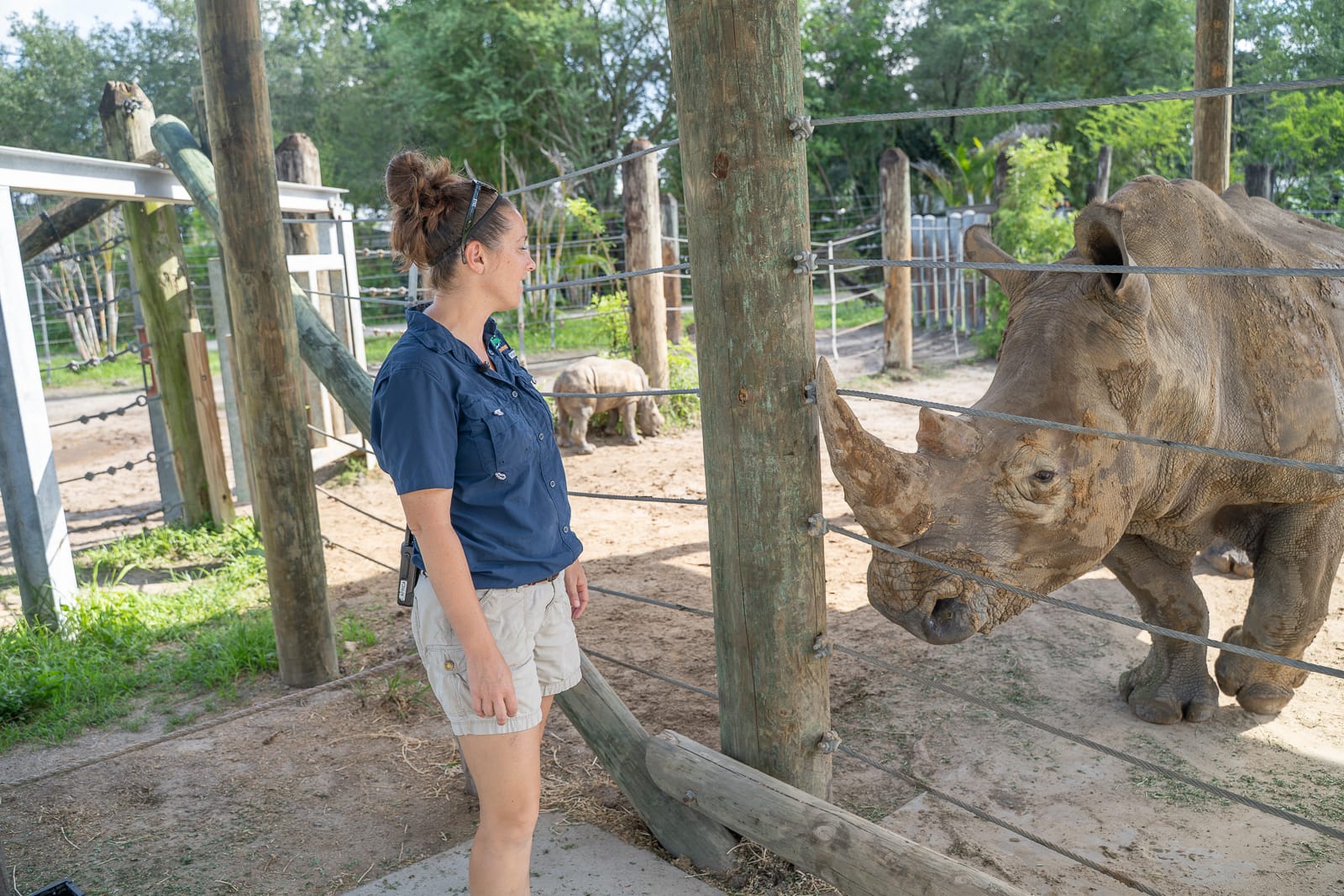
ZooTampa Baby Boom: The BEST summer ever to meet two baby rhinos!
ZooTampa welcomed a whopping 50+ babies this spring, which means there are a lot of cute new faces for you and the kids to see this summer. But the births are playing an even bigger role, extending far beyond bringing joy to ZooTampa guests. They represent the survival of a species.
Many of the births, like those of southern white rhinos Malaika and Kelele, are through the Association of Zoos and Aquariums Species Survival Plan®. This is a team effort among zoos and aquariums around the world to preserve species and to ensure these animals are around for generations to come.
Related: 10+ Unforgettable Ways to Upgrade Your Day at ZooTampa and INSIDE LOOK: New Tours and Experiences at ZooTampa this Summer
We met up with Christi Reiter, ZooTampa’s curator of elephants, rhinos and painted dogs — and a mom of two girls — to learn more about the zoo’s work to help save these species.
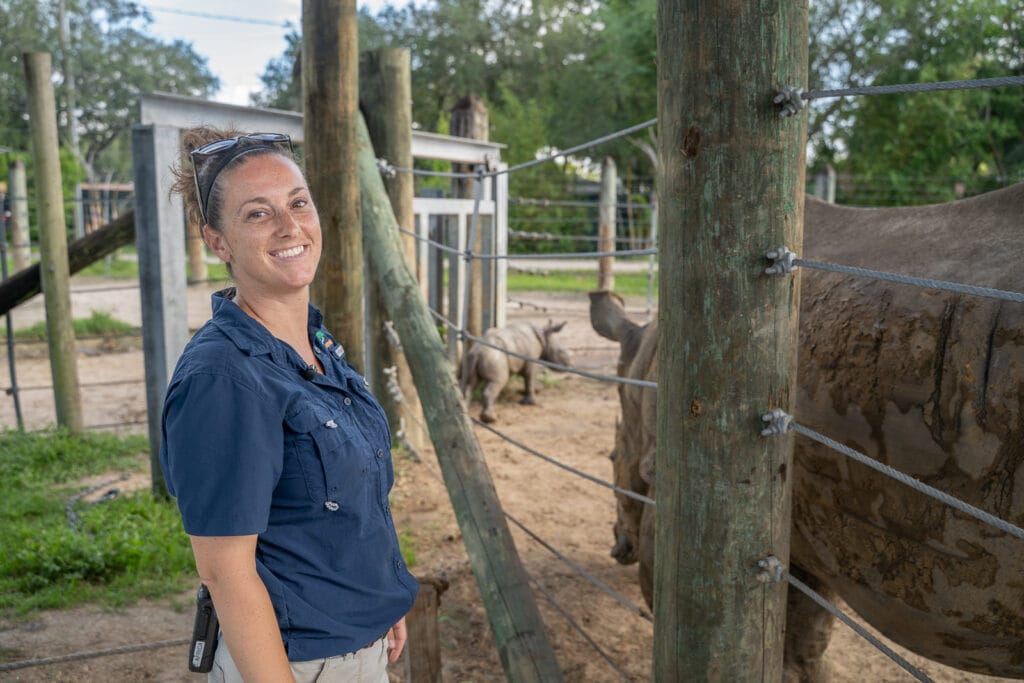
TBPM: Tell us about one of your most recent white rhino additions, Malaika!
Christi Reiter: So this here is mom, Alake, and the little nugget behind her is Malaika, who was just born on May 28. This is Alake’s fifth baby, so she is a seasoned mom, but she's a very protective mom compared to some of the others. She definitely sets the tone and sets the rules, and she's very aware of where her kid is.
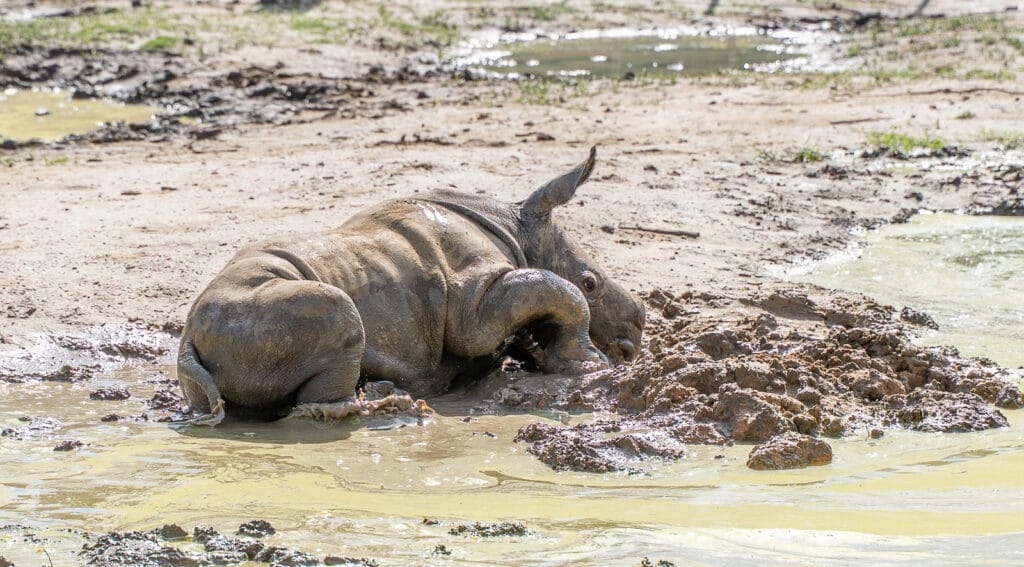
Because of that, Malaika is a little more timid than some of our other calves, just because she knows to stay with mom. She hasn't really had the freedom to run and go explore things on her own yet. But she is hitting all the milestones that I need her to hit. She's getting really comfortable in mud, which is a big thing for rhinos.
TBPM: She’ll soon get to meet her half-sister, Kelele.
CR: I think that the best form of enrichment that I can provide is a best friend, a sister, especially because everyone's so large. She’ll get to meet someone her size, which I think they'll both really enjoy. I also think the moms will enjoy it because maybe they'll entertain each other, and then the moms can go take a nap or do something without their child constantly attached to them, right? I'm a mom. I'm allowed to say that.
And I think for the guests and public — it’s a really cool experience. They don't stay small for long, and this doesn't happen very often, so the fact that it is happening here is a big deal. I hope that when people come to see them, they recognize how big a deal it is.
TBPM: Tell us more about the significance of Malaika and Kelele’s births.
CR: This is the 11th rhino we've had be born here. We're really good at being able to breed, hit the milestones, and then those rhinos will go off to other AZA-accredited zoos and help spread the genetics.
Not every institution is as lucky as we are, where they're able to breed. We're also just very successful. Our girls are very good moms, so because we're good at it, it's our duty to do that for the rest of the rhino population in North America, so we have rhinos all over the country that were originally born here. And that helps the population and keeps it fresh and diverse, so rhinos can live for a really long time, hopefully.
TBPM: How does the Species Survival Plan work?
CR: The Species Survival Plan, or SSP, is basically a match.com. It’s somebody's job — all they do is look at the genetics and the family tree of all sorts of species that need to be managed that are having low numbers, and they will recommend who should breed with whom. It's all across the country. And so they'll dictate who should breed and who shouldn't.
Alake is recommended to breed, breed, breed, breed, because she's one of the few that are always successful. Not many rhino programs can do what we do. So, because our girls are doing it, they want them to keep doing it.
This is a nationwide and even worldwide collaboration. Most of our animals stay within North America, but there are a few times that AZA will reach out to other zoos in other countries and be like, “It would be really great if these genes could come over here.” So everyone has a part to play.
We're all in the business of saving animals, and we all have a role to play in their conservation.
So when we do have kids, that's a win, not just for Zoo Tampa, but for all the zoos that hold white rhinos and everyone who's a white rhino lover.
TBPM: You also work with elephants here and recently transferred Sdudla, one of ZooTampa’s male African savanna elephants, to the San Diego Zoo Safari Park as part of the SSP. What was that experience like for you personally? Is it sad to see these animals move on to other zoos?
CR: On that day, I have a job to do, but as soon as that job is done, I usually get a little sad. I mean, I've been with them for so long, and I've been there from birth through everything else, and it is really sad. But I'm sad for me. I'm not sad for them. I’m sad selfishly that I don't want them to go, but they're having so much fun, and they're doing their important animal things, and it's what helps the species.
I keep telling myself that I shouldn't be sad; I should be honored that I got to play this part. I helped save elephants, and I helped save rhinos by doing this, and that's really important. But yes, I’m not gonna lie — it is sad not seeing some of your best friends every day. But it’s part of the job.
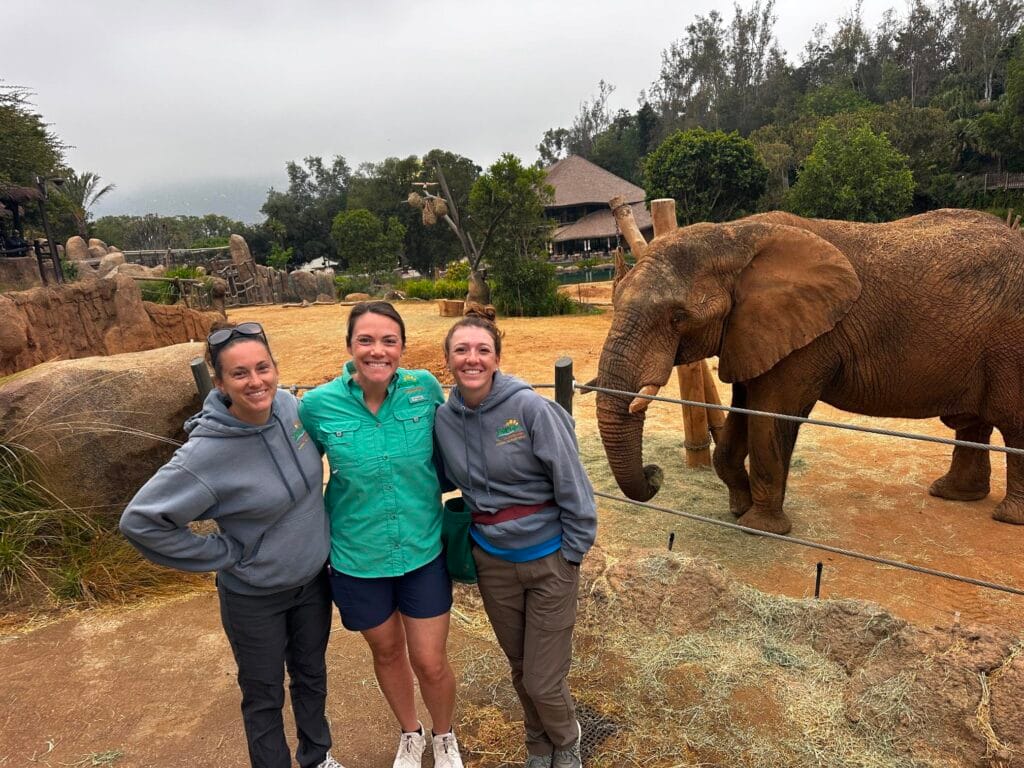
TBPM: When did you realize this is what you wanted to do for a career?
CR: I knew I wanted to work with elephants ever since sixth grade. My family, my dad especially, would say, “So you mean a vet?” I said, “Nope, not a vet. That's not what I want to do.”
I actually planned my college around this, and I had a couple of internships leading up to this. I think younger Christi would be really proud of where I am now because I haven't wavered once in what I wanted to do with my career, which is unusual. I have literally built my life around these animals, so I am really proud of where I am, and if you had asked me 20 years ago what I wanted to do, what's your dream job, I would say this.
TBPM: How has being a mom changed what you do here at the Zoo?
CR: Becoming a mom obviously changes you regardless of what your career is. But it did give me a perspective of what these animals are going through. I give moms way more wiggle room in the routine. If it's on the hotter side, I'll be like, “Oh, they must come in [into the barn].”
Whenever somebody gives birth, I always make sure to talk to the mom. Everyone wants to talk to the baby, but I remember — you’re a person too, so we hang out.
It's hard being a working mom, as it would be with any field. But my kids are old enough now to know this is super important to my life and theirs by proximity.
TBPM: These zoo babies are almost like your kids, too! It must be fun to watch them grow up — kind of like your own kids!
CR: They’re my children. I view them as my children. Everybody's a little different. What you get with one baby is not what you get with the other. So it's fun kind of watching them grow up and growing up alongside them to kind of see what they like, what they don't like, what they're going to get into, what they're not going to get into.
Her older half-sister [Kelele] is very energetic. She's full of energy, and she definitely gives her mother a run for her money, so it'll be interesting when they meet if she’ll continue to be timid and like stay by mom and follow the rules, or if she'll kind of bend a little bit and be influenced by her sister.
How to see the new rhinos at ZooTampa:
Hop on board Expedition Wild Africa Safari or view from the Africa public viewing areas.
If you want to get an even closer look, consider upgrading your day by booking the Southern White Rhino Encounter, where you can go nose-to-horn with the animals and meet the people like Reiter who care for them every day. The encounter is open to ages 5 and up. Prices start at $19.95 for zoo members and $24.95 for non-members.
Wild Facts About ZooTampa's Rhinos:
- Malaika: Southern white rhino born on May 28, 2026
- Kelele: Southern white rhino born on March 22, 2026
- Malaika means “angel” in Swahili.
- Kelele means “noise” and “highest peak” in Swahili.
- Malaika is the 11th southern white rhino born at ZooTampa. Her birth is the first time the Zoo has had two calves simultaneously.
- Southern white rhinos are the second-largest land mammals after elephants.
MORE Big Baby News at ZooTampa
ZooTampa also announced the successful hatching of critically endangered Panamanian golden frogs, marking a significant milestone in the conservation of this species, which has been extinct in the wild since 2009 due to habitat loss and the deadly chytrid fungus.
You can see the Panamanian golden frog in Reptile & Amphibian Discovery in the new Florida Waters.
The Zoo also welcomed two female impala calves on May 18, named Kendall and Laura Layna.
*Originally published in the July 2026 issue of Tampa Bay Parenting Magazine.